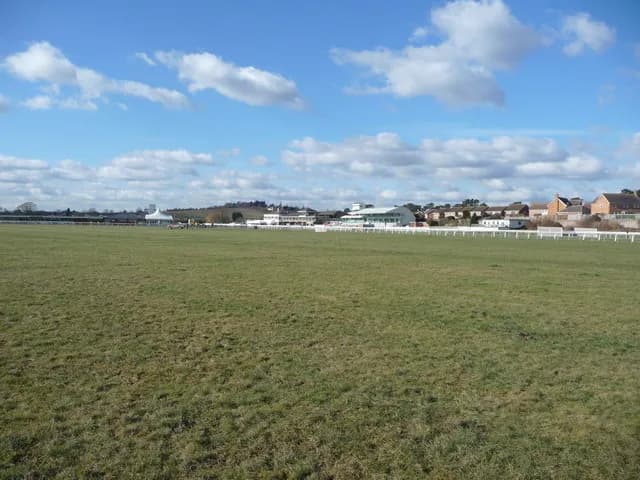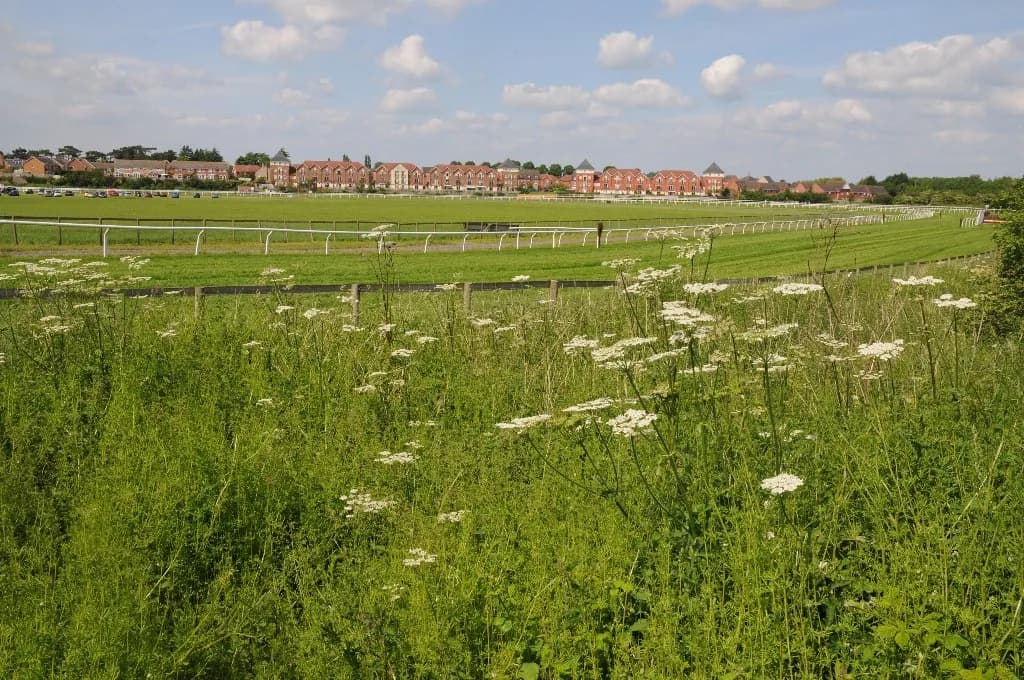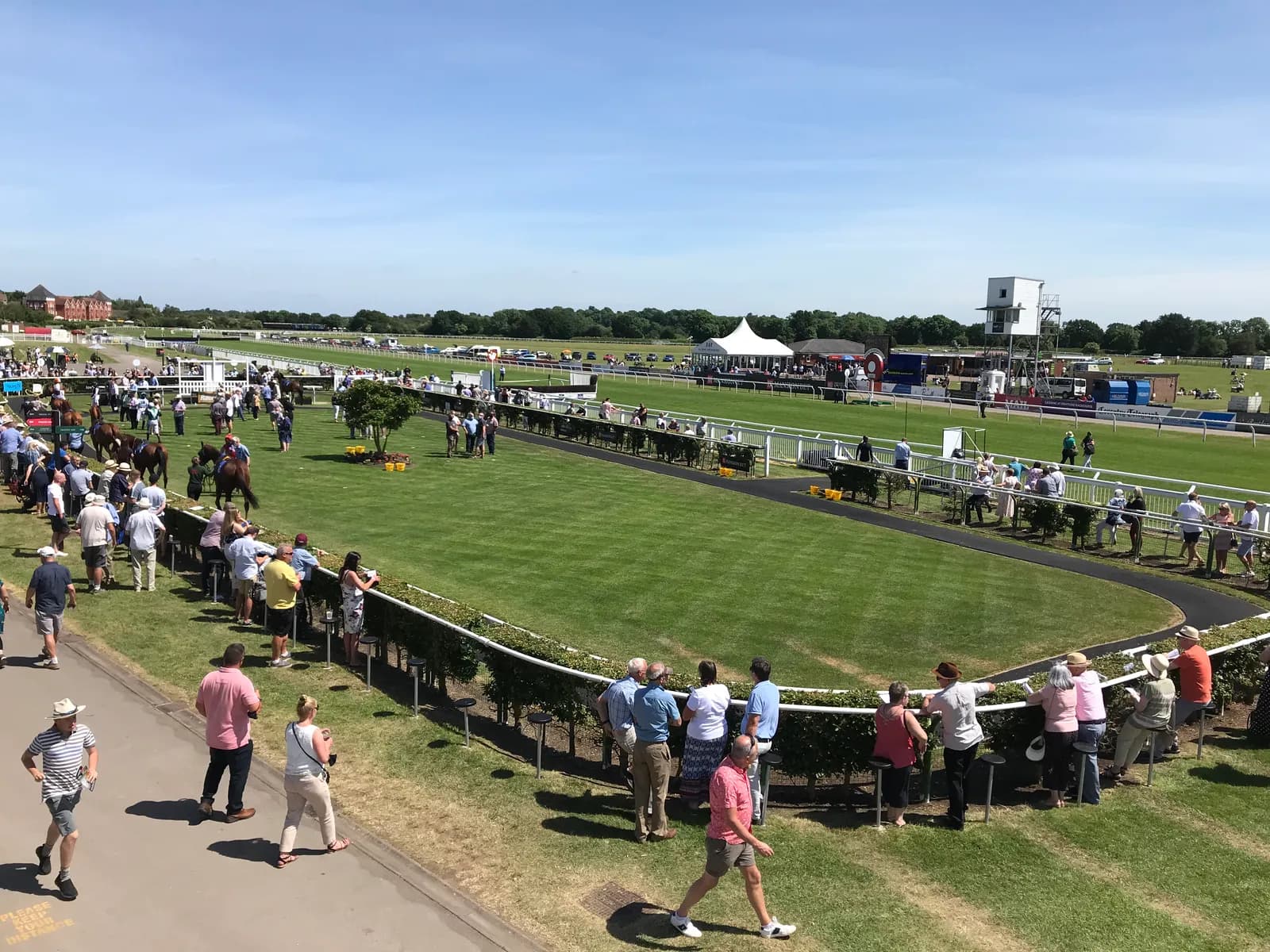
In September 1769 the actor David Garrick brought the fashionable world to Stratford for his Shakespeare Jubilee, three days of processions, fireworks and pageantry in honour of the playwright. Among the entertainments was a race for a Jubilee Cup. Long after the bunting came down, the idea of racing in Stratford lasted, and the course on Luddington Road, on the meadows south-west of the town, still describes itself proudly as open since 1755.
For Coventry racegoers this October, it is the only game in the county. Warwick Racecourse has no fixture this month and does not race again until 3 November, so Stratford's three meetings are Warwickshire's October racing in full. The last of them, on Thursday 29 October, is also the course's final fixture of 2026: after that, the next date on its calendar is in March 2027.
The October 2026 fixtures
- Monday 5 October: day meeting.
- Saturday 17 October: day meeting, the only weekend card of the month and the obvious choice for a family outing.
- Thursday 29 October: day meeting and the season finale before the winter break.
The course has said the Centre Course enclosure will be closed on 5 and 29 October, with Main Enclosure tickets only on those days. All three meetings are jump racing, over hurdles and fences.
Two and a half centuries of Stratford racing
The first recorded races near the town were run in July 1718 on Shottery Meadow, the village better known today for Anne Hathaway's Cottage. The racecourse proper opened in September 1755. That year's prize was a purse of fifty pounds, and the race was won by a Mr Cornwall's five-year-old called Redstreak.
Garrick's involvement made Stratford races briefly famous, but it also made them crowded, and according to the racecourse's own history the meetings lapsed around 1778 after local farmers complained that racegoers were ruining their crops. Racing came back in the nineteenth century, increasingly over jumps, and stopped again during the First World War, from 1914 to 1919. On 31 January 1922 the Stratford Race Company was formed, and it has run the course ever since.
The modern shape of the place dates from the post-war years. A new grandstand with a weighing room opened in 1955, and a restaurant followed ten years later. For a while racegoers could even arrive by a dedicated train. Stratford-on-Avon Racecourse Platform opened on 6 May 1933 on the line south to Honeybourne and Cheltenham, and served race crowds until it closed on 25 March 1968. Its trackbed is now part of the Stratford Greenway, the walking and cycling path that runs past the course.
More recently, in 2008, a water jump was added in the home straight, though it is bypassed on the final circuit.
For the seasoned racegoer
Stratford is a left-handed, roughly triangular track of about a mile and a quarter, with eight fences to a circuit and a run-in of around 200 yards after the last. Two tight bends and three fences in the home straight make it sharp, and races here are often run at a strong gallop from the start. It rewards a nimble, quick-jumping horse that can hold a position, and a horse that needs a long galloping straight to wind up can find the race gone before it has got going. Watch for jockeys who sit handy rather than waiting at the back: on a course this tight, ground lost on the turns is hard to make up.
Stratford's best-known race is the Champion Hunters' Chase, a twilight fixture in late spring that the course ranks alongside the hunter chases at Cheltenham and Aintree. October is a different proposition. These are the closing cards of a long summer jumping season, often featuring horses with plenty of recent form on fast ground, alongside a few winter types having a sharpener before the bigger tracks. Early October ground can be quick: the course was watering ahead of the 5 October meeting.
For a first visit
Stratford is small and friendly, and that makes it a good place to learn. From the stands you can follow almost the whole of a race, and the parade ring is close to the action. Get there well before the first race, buy a racecard and take a lap of the enclosure so you know where the bookmakers, the Tote and the winner's enclosure are.
Before each race the runners walk round the parade ring. Most experienced racegoers look for a horse that is calm but alert, moving freely, with a bright coat. If one is sweating heavily or pulling its handler around, that can be a sign of nerves.
On the betting side, the Tote is a pool, so the dividend depends on how much has been staked overall and on the winner. The on-course bookmakers offer fixed odds that are settled at the price you took. An each-way bet is really two equal bets: one for the horse to win and one for it to finish in the places. Set yourself a firm budget at the start of the day and leave it there.
There is no strict dress code at most jumps meetings of this kind. Smart-casual is fine, and in October warm layers and comfortable shoes matter far more than a tie. Check the course FAQs for enclosure-specific rules.
Making a day of it in Shakespeare's town
From Coventry the A46 runs straight past Warwick to Stratford, and the racecourse is signposted from the A46 and the A439 as you approach. By rail there is usually a change, often at Leamington Spa, and Stratford-upon-Avon station is roughly two miles from the course, so allow for a taxi or a brisk walk.
Stratford rewards a morning before racing. Start on Henley Street at Shakespeare's Birthplace, then walk down past the half-timbered buildings to the site of New Place, the house where he spent his final years. The Royal Shakespeare Theatre and the Swan Theatre stand on the riverbank beside Bancroft Gardens, where narrowboats tie up at the canal basin and swans gather on the Avon. Cross the medieval Clopton Bridge for the view back towards the town, or follow the river south to Holy Trinity Church, where Shakespeare is buried in the chancel.
Families have options too. The Stratford Greenway is flat, traffic-free and easy for children on bikes or scooters, and it passes the old racecourse platform site. And for a quiet walk with a racing twist, head out to Shottery: the lanes around Anne Hathaway's Cottage are the same countryside where the town's first races were run three centuries ago.
Before you go
Check the Stratford Racecourse website for first-race times, enclosure availability, tickets and the latest going report. Weather can still force an inspection or abandonment, even in October, so look again on the morning before setting off from Coventry.