St Mary's Guildhall stands as one of Coventry's most significant medieval buildings, its stone walls bearing witness to nearly seven centuries of English history. From Catholic queens to American abolitionists, the Grade I listed structure has played host to figures whose actions shaped the nation's religious, political, and social landscape.
Medieval Origins and Construction
The Guildhall was constructed between 1340 and 1342, serving originally as the headquarters for the merchant guild of St Mary. Following the merger of several Coventry guilds in 1392, it became the centre for the united guilds of the Holy Trinity, St Mary, St John the Baptist, and St Katherine. The building underwent significant extension and alteration in 1460, giving it much of the character visible today.
After the suppression of chantries under King Edward VI in 1547, the Guildhall's purpose shifted dramatically. It served as Coventry's armoury and treasury from that date until 1822, storing weapons during the English Civil War in the 1600s. The building also functioned as the headquarters for city council administration until the Council House opened in 1920. During the Victorian era, the medieval flooring was replaced with a sprung wooden floor for dancing in the 1750s, and in 1861 the space operated as a soup kitchen for the city's poor.
Mary Queen of Scots: A Catholic Prisoner in a Protestant City
The Guildhall's most notorious guest arrived in November 1569, following the Catholic Rising of the North. Mary Queen of Scots, already stripped of her Scottish throne and seeking refuge in England, found herself treated as a prisoner rather than a guest of her cousin, Elizabeth I.
Following the failed uprising, Mary was rushed south from Tutbury Castle to Coventry under Elizabeth's orders. The English queen had suggested housing Mary at Coventry Castle, but the structure had decayed too far to serve as a secure prison. Instead, Mary was first held at the Bull Inn on Smithford Street before being moved to the Mayoress's Parlour within St Mary's Guildhall, where she would spend the winter months.
The timeline maintained by St Mary's Guildhall indicates she was "most likely imprisoned in the Mayoress' Parlour (Drapers room)" during her stay. Her imprisonment in this medieval chamber reflected the precarious position of Catholics in Elizabethan England; Coventry itself had strong Protestant sympathies, making it an ideal location to isolate the Catholic claimant to the English throne.
Mary remained at the Guildhall until May 1570, when the defeat of the northern rebels allowed her to be transferred north to Chatsworth. She would spend another nineteen years in various English prisons before her execution at Fotheringhay Castle in 1587.
Frederick Douglass: Freedom's Voice in the Medieval Hall
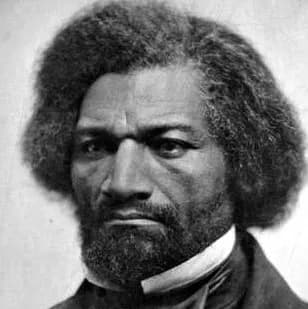
Nearly three centuries later, another historical figure of immense significance stood within the Guildhall's walls. Frederick Douglass, the American abolitionist who had escaped slavery in Maryland around 1838, delivered his final lecture in Coventry at St Mary's Guildhall on 2 February 1847.
Douglass had arrived in Britain in 1845, fearing that his former enslaver might attempt to kidnap him back into bondage following the publication of his autobiography, "Narrative of the Life of Frederick Douglass, an American Slave." Between 21 January and 2 February 1847, he delivered three public lectures in Coventry, with the Guildhall address serving as the culmination of his visit.
Contemporary accounts record Douglass noting he was surrounded by a "sea of upturned faces" which "filled him with hope that the day was not far distant when there would be not a slave in all the world." The impact of his words extended far beyond the lecture hall. The people of Coventry were so moved by Douglass's testimony that they raised sufficient funds for him to purchase his freedom upon returning to America, along with additional money to establish his own newspaper.
This act of solidarity connected Coventry directly to the transatlantic struggle against slavery, demonstrating how the city's medieval architecture could serve as a platform for progressive causes centuries after its construction.
The Coventry Tapestry and Royal Connections
Beyond its political prisoners and abolitionist speakers, the Guildhall houses one of Britain's most remarkable medieval treasures. The Coventry Tapestry, created between 1505 and 1515, remains one of the oldest tapestries in the country still hanging on the wall for which it was designed. The couple portrayed are thought to be King Henry VI and Queen Margaret of Anjou, and the work is considered one of the last shrines to the posthumous cult of Henry VI in England.
The tapestry underwent significant restoration work in 2022, with the cleaning process revealing fine details and colours that had been obscured by centuries of accumulated grime. The Guildhall has also received royal visitors throughout its history, including Princess Elizabeth Stuart in 1604 and Prince Henry Stuart in 1612.
Restoration and Modern Use
In 2020, the city council launched a £5.6 million restoration project as part of its Cultural Capital Investment Programme. The work included the installation of a lift for wheelchair access to the first floor, the creation of 360-degree panoramic views through digital tour tablets, and the revealing of a medieval kitchen that had been hidden for over a century.
The Guildhall reopened to visitors in July 2022 and now operates as a tourist attraction, wedding venue, and corporate events space. The Tales of Tea tea room occupies the vaulted undercroft, offering visitors the chance to experience the building's medieval atmosphere while enjoying refreshments.
The restoration also prompted renewed interest in the building's civil rights heritage. In 2020, Coventry University launched the Frederick Douglass in Coventry Project to promote awareness of the city's connections to the abolitionist movement and to preserve this important chapter of transatlantic history.
St Mary's Guildhall remains open to the public, its medieval chambers continuing to tell the stories of queens and freedom fighters, merchants and monarchs, across nearly seven hundred years of Coventry's history.